To realize The value of a sister Ask someone Who doesn't have one.
ارزش يک خواهر را، از کسي بپرس که آن را ندارد.
To realize The value of ten years: Ask a newly Divorced couple.
ارزش ده سال را، از زوج هائي بپرس که تازه از هم جدا شده اند.
To realize The value of four years: Ask a graduate.
ارزش چهار سال را، از يک فارغ التحصيل دانشگاه بپرس.
To realize The value of one year: Ask a student who Has failed a final exam.
ارزش يک سال را، از دانش آموزي بپرس که در امتحان نهائي مردود شده است.
To realize The value of one month: Ask a mother who has given birth to a premature baby.
ارزش يک ماه را، از مادري بپرس که کودک نارس به دنيا آورده است.
To realize The value of one week: Ask an editor of a weekly newspaper.
ارزش يک هفته را، از ويراستار يک مجله هفتگي بپرس.
To realize The value of one hour: Ask the lovers who are waiting to meet.
ارزش يک ساعت را، از عاشقی که منتظر ملاقات است بپرس.
To realize The value of one-second: Ask a person who has survived an accident.
ارزش يک ثانيه را، از کسي بپرس که از حادثه اي جان سالم به در برده است.
To realize The value of one millisecond: Ask the person who has won a silver medal in the Olympics.
ارزش يک ميلي ثانيه را، از کسي بپرس که در مسابقات المپيک، مدال نقره برده است.
Time waits for no one. Treasure every moment you have. You will treasure it even more when you can share it with someone special.
زمان براي هيچکس صبر نمي کند. قدر هر لحظه خود را بدانيد. قدر آن را بيشتر خواهيد دانست، اگر بتوانيد آن را با ديگران نيز تقسيم کنيد.
To realize the value of a friend: Lose one.
براي پي بردن به ارزش يک دوست، آن را از دست بده.
Forward this letter to friends, to whom you wish good luck. Peace, love and prosperity to all .
اين نوشته را به دوستان خود يا هر کسي که برايش آرزوي خوشبختي داريد، ارسال کنيد. صلح، عشق و کاميابي ارزاني همگان باد.
,The condition of your life
.is the reflection of your thought
.You would become the person that you think of daily
.Join these days & make a perfect person
.You create your thoughts, so try to create nice ones
, وضعیت زندگی شما باز تاب افکار شماست
شما آن کسی می شوید که هر روز در باره اش فکر می کنید
پس این روزها را به هم پیوند زنید و انسانی کامل بسازید
این شمائید که افکار خود را خلق می کنید
پس سعی کنید افکار خوب خلق کنی
:A good site for proofs about Pythagorean Theorem is
Pythagorean Theorem and its many proofs
Discovery of Bromine
Bromine compounds have been used since ancient times.
In the first century AD Pliny describes one of the world’s first chemical industries: dye factories making Tyrian purple. Tyrian purple (or royal purple) is an ancient purple dye obtained from a marine mollusk. A major component of the dye is the compound 6,6′-dibromoindigo.
Three people are significant in the story of the element bromine’s discovery.
First there’s German chemist Justus von Liebig, one of most famous chemists of his time. Liebig could have been credited with the independent discovery of bromine, but he squandered the opportunity.
In 1825 a salt maker sent Liebig a sample of salt spring waters from the German town of Bad Kreuznach, asking for an analysis.
The sample had a relatively high amount of bromine in it, which Liebig isolated. Without considering the substance too seriously, he concluded it was a compound of iodine and chlorine.
Only when bromine’s existence had been announced did an anguished Liebig return to the red-brown liquid to study it closely.
He then placed the bottle in his ‘mistakes cupboard’ to remind himself that preconceived ideas ruined his chance of discovering something new and to try not to make the same mistake again.
The next name in the story of bromine is Carl Lðwig (Loewig), who discovered bromine in 1825, while still a chemistry student at Heidelberg University, Germany.
Lðwig’s home town was Bad Kreuznach, where Liebig’s sample had come from. Lðwig had taken water from a salt spring in Bad Kreuznach and added chlorine to the liquid. He shook the solution with ether and found a red-brown substance dissolved in the ether. Lðwig evaporated the ether to leave a red-brown liquid: bromine.
His professor at Heidelberg asked Lðwig to prepare more of this substance for testing. By the time Lðwig had done this it was 1826 and a final name – Antoine Balard – had taken over the story of bromine’s discovery.
In 1824 Antoine Balard, aged 21, was studying the plant life in a salt marsh in Montpellier, France. He became interested in salt deposits he saw and began investigating them.
He took brine (sea water in which salts have been concentrated by evaporation of water) and crystallized salt from it. He took the remaining liquid and saturated it with chlorine.
He then distilled the solution to leave a dark red liquid.
Alert to the possibility that he had found something very interesting, Balard gave the French Academy of Science a sealed envelope containing his initial results in 1824.
He finally published his results in 1826, providing evidence that the substance he had discovered was a new ‘simple body’ – i.e. an element, not a compound.
As first to publish, he became bromine’s discoverer. Ironically, like Liebig, his first idea was that the substance was a compound of chlorine and iodine.
The French Academy named the new element after the Greek bromos for ‘stench’ because bromine, quite simply, stinks.
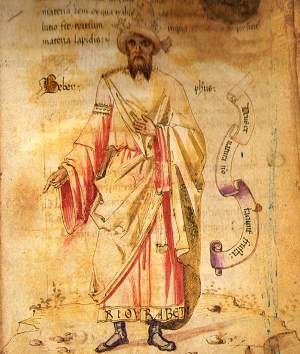
Geber, Jabir ibn Hayyan, born in Persia (Iran) in the 6th Century A.D. Geber systemized and brought experimental methods to alchemy. He believed all metals were based on mercury mixed in different proportions and different purities with sulfur. If the mercury and sulfur were perfectly pure and mixed in perfect proportions, they would form gold.
The periodic table we use today is based on the one devised and published by Dmitri Mendeleev in 1869.
Mendeleev found he could arrange the 65 elements then known in a grid or table so that each element had:
1. A higher atomic weight than the one on its left. For example, magnesium (atomic weight 24.3) is placed to the right of sodium (atomic weight 23.0):

برای دانلود نمونه سوالات از لینک مستقیم بر روی ادامه مطلب کلیک کنید.
ادامه مطلب...

"If all the elements are arranged in the order of their atomic weights, a periodic repetition of properties is obtained. This is expressed by the law of periodicity."
Dmitri Mendeleev, Principles of Chemistry, Vol. 2, 1902, P. F. Collier, p17.

"We have here a proof that there is in the atom a fundamental quantity, which increases by regular steps as one passes from one element to the next. This quantity can only be the charge on the central positive nucleus, of the existence of which we already have definite proof."
Henry Moseley, Philosophical Magazine, Vol. 26, 1913, p1030.

"The chemistry of an atom depends only on the number of electrons, which equals the number of protons and is called the atomic number. Chemistry is simply numbers, an idea Pythagoras would have liked. If you are an atom with one proton, you are hydrogen; two, helium;....."
Carl Sagan, Cosmos, 1980, Random House, p223. Photo: NASA.

ورود کاربران
خوش آمدید! لطفا وارد حساب خود شوید